Turning JoyCat's brand foundation into the messaging, structure, and pages that bring it to market online. Updated with the revisions from Holly's alignment call.
The brand foundation is a strong internal asset. This is how it becomes a website that wins the click and earns the return visit.
A concrete product win on top. The curiosity-led philosophy underneath. The moment earns the click; the philosophy earns the return visit.
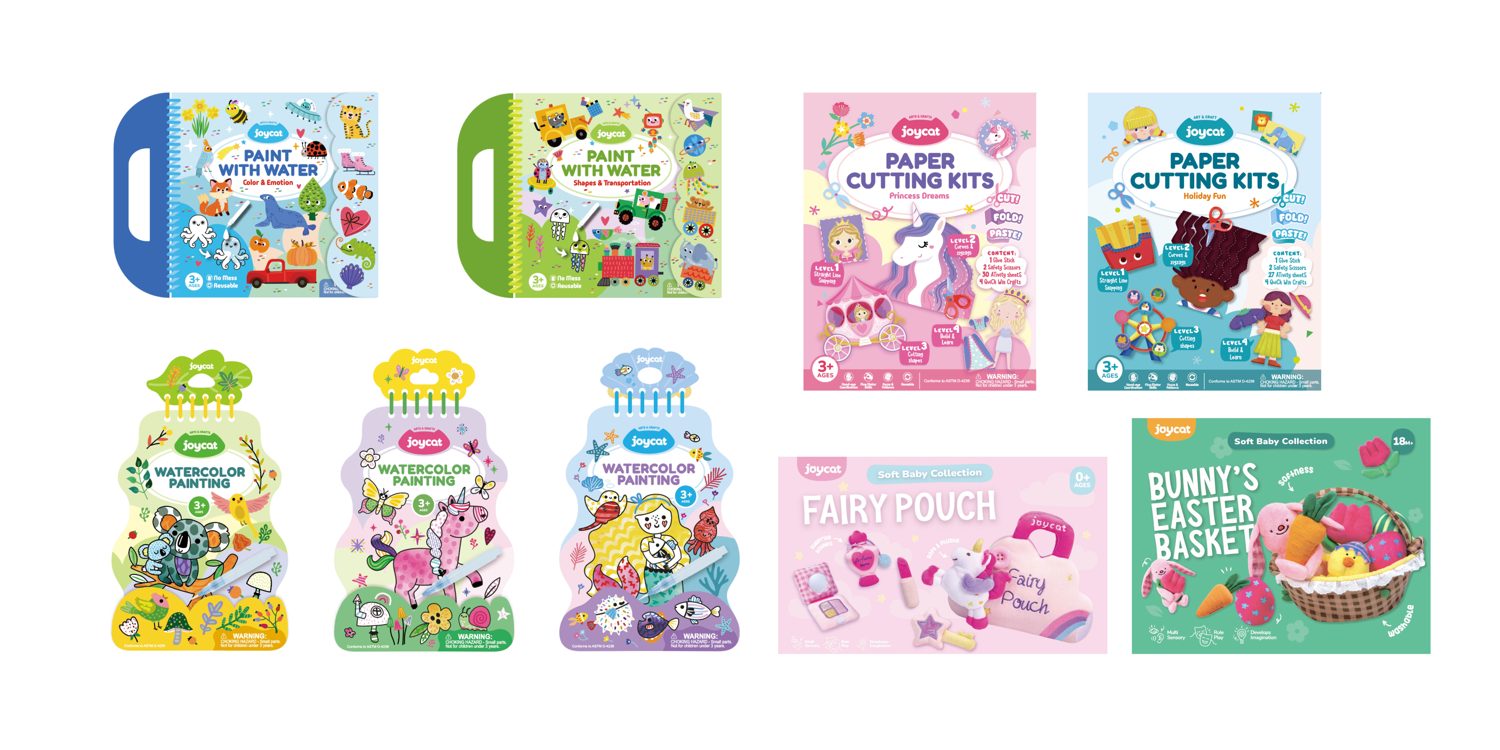
Organize the catalog By Moment, Create, Discover, Travel, Share, then by line, then by age. A navigation position no competitor owns.
The relaunch focus aligned at kickoff. The emotional register, the buying behavior, and the lifetime value all support locking it there.
The foundation is curiosity-led and mass-accessible at once. External messaging carries both, in one order: moment first, philosophy underneath.
A parent scrolling at 9pm with a fussy baby will not read 150 words of philosophy before she taps. She needs to know what the product does in three seconds.
The layering principle is the brand's own: "Educational benefits can live in secondary messaging, but the first layer should always lead with feeling or scene." We turn that into a page structure.
Run all three, measure click-through, lock the winner. Note the customer-facing copy now stays age-agnostic: "0-6" lives in the architecture as the strategic priority, not in the headline, so the 6-12 gift-buyer never feels shut out. "Open-ended" is retired for language that shows the moment instead.
AI can answer almost anything in seconds. It still can't wonder. The most valuable thing a child can learn now is how to ask the next question.
No other brand in the toy category is making this argument. It is the angle that opens cultural, founder-tier press, and it makes the curiosity wedge feel urgent rather than philosophical. Surfaced by Holly on the call. We are naming it as a positioning pillar, not a paragraph.
Three cuts. The first one is the brand voice, applied to the way the catalog is browsed.
Try it: switch the label sets, then hover any word. The hover line is the micro-copy that teaches it in five seconds. The territories stay fixed; only the words are being workshopped. Option D is shown with Travel kept, our lead.
These are the brand book's own Four Scene Territories (Section 08). The book defines them as emotional entry points, not product categories. This recommendation applies that same frame to navigation, so the structure reinforces the voice. No competitor in the category browses by moment.
The rational, comparative cut for the parent who already knows what kind of product she wants.
Stays in the nav because age-led browsing is the habit parents bring from Amazon. The 6+ filter keeps the 6-12 catalog searchable without featuring it. It sits last because the goal is to lead with brand-voice browsing first.
Holly asked to workshop the labels, so these are options, not a decision. Our recommendation keeps the four distinct shopping modes intact, make, learn, on-the-go, give, because collapsing them into one curiosity-flavored set loses the moment a parent is actually shopping in.
| Territory (book) | A · Baseline | B · Action | C · Moment | D · Sharpened |
|---|---|---|---|---|
| Create | Create | Make | The Making Hour | Imagine |
| Discover | Discover | Wonder | The Wondering Hour | Notice |
| Travel | Travel | Move | The Outside Hour | Explore |
| Share | Share | Gift | The Gifting Hour | Share |
Recommendation: "Notice" is the single most ownable word, it appears nowhere else in the category and echoes the brand book's own principle that children notice and wonder first. But it is also the least self-evident as a nav label, so it earns its place only with hover micro-copy that teaches it in five seconds. One caution: keep Travel as its own word, making our lead set Imagine / Notice / Travel / Share. Travel is the on-the-go, no-screen, "what do I bring on the flight" moment, the exact query that wins AI-search recommendations, and "Explore" blurs into Discover. Workshop live with JoyCat.
Focus the relaunch at 0-6. Keep 6-12 SKUs live and searchable, but out of the brand-led IA. Customer-facing copy stays age-agnostic. Revisit width in twelve months.
The furthest line from the curiosity wedge and the hardest to differentiate. Confirm SKU revenue contribution with JoyCat before locking it as a primary pillar.
Joy leads the relaunch; the Cat Family (ArtyCat, CleverCat, ZipCat, TiniCat) holds for Phase 2 so each character gets full storytelling weight. JoyCat to confirm.
Four lines, one feeling each. Every product judged by one question: how many different ways can a child use it?
The moment up top. The promise in the middle. The function below the fold, where it earns its place.
Directional recommendations to keep visual decisions aligned with the brand voice.
Built for brand-story moments, About Us, and social. Not the homepage hero. A separate motion asset for wherever Joy needs to feel alive on the page.
Each module is drafted in JoyCat voice and ready to flow into the Shopify build.
One sentence, founder voice, the why.
The anti-anxiety positioning as a cultural observation. No competitor named.
Curiosity in the AI era. The PR-ceiling angle.
Four product lines, one line each, in JoyCat voice.
The audience, written warmly and age-agnostic.
The IP introduction, the Cat Family teased.
Closing line and CTA.
Four confirmations that sharpen the build before Phase 2 kicks off.
Confirm SKU revenue contribution before we lock it as a primary pillar.
Top search terms, the top 50-100 reviews verbatim, and the SKU revenue split, 0-6 vs 6-12.
Workshop the four nav words. Our lead is Option D with Travel kept: Imagine / Notice / Travel / Share.
Confirm casting and location direction before the Phase 2 shoot.